
Protection Orders Under the DV Act
Understand protection orders under the DV Act 2005 — types, legal process, and how to apply. Get expert legal help from a top domestic violence lawyer in Pune. Call +91 1169261749.

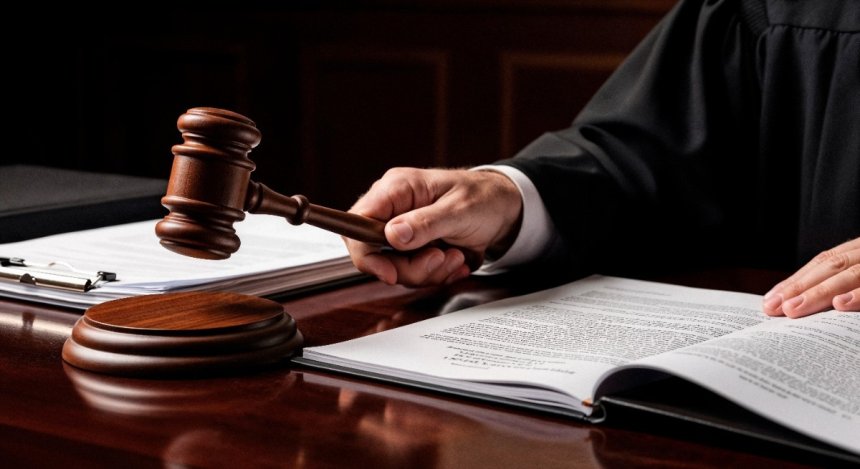
Protection Orders Under the DV Act: Your Legal Shield Against Domestic Violence
Introduction
Imagine being forced out of your own home, constantly threatened, and denied access to even basic financial resources — all at the hands of someone who is supposed to protect you. Unfortunately, this is a reality for millions of women in India, with approximately 30% of married women having experienced physical or sexual violence from their spouse . The Protection of Women from Domestic Violence Act, 2005 (PWDVA) was created to provide a strong civil remedy to address these situations, fundamentally changing the legal landscape for women facing abuse.
What are protection orders under the DV Act? They are a set of powerful legal remedies — including Protection Orders, Residence Orders, Monetary Relief Orders, and Compensation Orders — available to an "aggrieved person" from a Magistrate . These orders are the Act's most potent tools, offering immediate civil relief. The key to understanding the PWDVA is that it is predominantly a civil law, providing a wide array of remedies for breaches of rights. However, it is given "teeth" through criminal provisions, as any breach of a protection order is a cognizable and non-bailable offence . A complaint can be filed directly before a Judicial Magistrate First Class (JMFC) in the jurisdiction where the aggrieved person resides, without the need to file an FIR first .
Navigating the legal process can be overwhelming, but you do not have to do it alone. This guide, authored by experienced family and criminal law practitioners at Advocate in Pune, will explain the types of protection orders available, the legal process, and how we can help you secure safety and justice.
Why Choose Advocate in Pune for Your Domestic Violence Case
In cases of domestic violence, time, sensitivity, and expertise are of the essence. At Advocate in Pune, our team of experienced lawyers understands the immense trauma and legal complexity involved in these cases. We bring deep expertise in the Protection of Women from Domestic Violence Act, 2005, and the Bharatiya Nyaya Sanhita (BNS), 2023, having successfully handled numerous cases before the Pune District Court, Family Courts, and the Bombay High Court .
Our firm is built on a foundation of client-centric advocacy, transparent communication, and a deep commitment to protecting your rights. We understand that a domestic violence case is not just a legal issue—it is a matter of your safety and dignity. Our local presence in Pune, with its well-established legal framework, ensures we can provide swift, effective legal intervention to help you secure the protection you deserve .
Criminal Cases We Handle
We provide expert legal representation across a wide spectrum of criminal and family matters, including:
-
Domestic Violence (PWDVA): Filing applications for Protection Orders, Residence Orders, Monetary Relief, and Compensation Orders .
-
Dowry Harassment: Cases under Section 85 BNS (formerly Section 498A IPC) and Dowry Prohibition Act .
-
Bail Matters: Regular bail, anticipatory bail, interim bail, and default bail.
-
Criminal Defense: Representation in cases of assault, wrongful confinement, and other crimes under BNS .
-
Matrimonial Disputes: Divorce (mutual and contested), child custody, and maintenance.
-
Service & Employment Law: Cases involving government employees and workplace harassment.
-
Cheque Bounce Cases (Section 138 NI Act): Filing and defending complaints.
-
Cyber Crime: Cases of online harassment, defamation, and identity theft.
Our Legal Services for Domestic Violence
We offer a comprehensive suite of legal services to guide you through every step of a domestic violence case:
-
Emergency Legal Consultation: Immediate legal advice on your rights and remedies under the PWDVA.
-
Filing DV Applications: Expert drafting and filing of applications for Protection, Residence, Monetary, and Compensation Orders under Sections 12, 18, 19, 20, and 22 of the Act .
-
Interim & Ex-Parte Orders: Pursuing urgent interim or ex-parte orders to ensure your immediate safety .
-
Coordination with Protection Officers: Liaising with the District Protection Officer (DPO) to file a Domestic Incident Report (DIR) .
-
Evidence Preparation: Guiding you on preserving crucial evidence, such as photographs, medical records, and threatening messages .
-
Court Representation: Aggressive representation before the JMFC, Family Court, and appellate courts .
-
Assistance with Enforcement: Ensuring compliance with the court's orders and representing you in proceedings for breach of protection orders under Section 31 of the DV Act .
Legal Process for Protection Orders Under the DV Act
The PWDVA provides a clear, time-bound process for securing protection. Here is a step-by-step guide to how the process works:
1. Approaching the Magistrate & Filing an Application
An application under the Act can be made directly to the Judicial Magistrate First Class (JMFC) by:
-
The aggrieved person herself.
-
A Protection Officer on her behalf.
The application should detail the nature of the domestic violence and the specific reliefs sought, such as protection, residence, or monetary relief . It is advisable to seek legal counsel at this stage to ensure a well-drafted application.
2. Role of the Protection Officer & Domestic Incident Report (DIR)
The aggrieved person can also approach a Protection Officer (PO) for assistance. The PO is mandated to assist with the preparation of a Domestic Incident Report (DIR) , which is filed along with the application, detailing the facts and the remedies sought .
3. First Hearing & Interim/Ex-Parte Orders
The Magistrate must fix the first hearing date within three days of receiving the application . At this stage, the court may, if satisfied that domestic violence has occurred or is likely to occur, grant urgent interim orders, including ex-parte orders, to provide immediate protection .
4. Proceedings & Final Orders
The court will proceed to hear both parties. Under Section 28 of the Act, the procedure generally follows the CrPC/BNSS . The Magistrate will then pass final orders on the various reliefs. The Act provides for a timeline of 60 days for concluding proceedings, though this is a directory guideline .
Types of Protection Orders Under the DV Act
1. Protection Orders (Section 18)
This is the most powerful tool to stop ongoing abuse. A Protection Order prohibits the respondent (the abuser) from:
-
Committing any act of domestic violence.
-
Entering the aggrieved person's place of employment or her children's school.
-
Attempting to communicate with her in any form.
-
Alienating any assets or operating bank accounts in which she has an interest .
2. Residence Orders (Section 19)
These orders protect a woman's right to live in the shared household. This is crucial as it prevents a woman from being evicted or dispossessed, regardless of who owns the property . The court can:
-
Restrain the respondent from evicting or disturbing her possession.
-
Direct the respondent to secure alternative accommodation for her .
3. Monetary Relief (Section 20)
The court can order the respondent to pay monetary relief to cover losses and expenses caused by domestic violence, including:
-
Loss of earnings.
-
Medical expenses.
-
Destruction or damage to property.
4. Custody Orders (Section 21)
The court can grant temporary custody of any child or children to the aggrieved person, specifying arrangements for visitation by the respondent .
5. Compensation Orders (Section 22)
The Magistrate may also award compensation and damages for injuries, including mental torture and emotional distress caused by acts of domestic violence .
Punishment for Breach of Protection Order (Section 31)
What happens if the protection order is violated? Breach of a protection order is a criminal offence under Section 31 of the DV Act. The respondent can be punished with imprisonment for up to one year and/or a fine of up to ₹20,000. The offence is cognizable and non-bailable, meaning the police can arrest without a warrant and bail is not a matter of right .
Why Early Legal Advice Matters
Early legal advice is not just important—it is essential to your safety. An experienced advocate in Pune can make a pivotal difference by:
-
Ensuring you don't leave your home prematurely: Without a Residence Order, you may be misled into leaving your shared household, which can weaken your case. Your lawyer will advise you on your right to stay .
-
Securing urgent interim relief: An advocate can file an application for an urgent ex-parte order to prevent the abuser from harming you or evicting you .
-
Preserving crucial evidence: They will guide you on what evidence to collect and how to present it effectively, which is the backbone of a strong case .
-
Avoiding procedural pitfalls: A lawyer ensures your application is filed in the correct court and is drafted properly, significantly increasing your chances of success .
-
Protecting you from false accusations: They can also defend you if the respondent files a counter-case.
Courts Covered
Our firm represents clients across a wide network of courts in Pune and the surrounding region:
-
Pune District Court & Sessions Court: We regularly appear for all matters related to domestic violence and criminal trials.
-
Family Court, Pune: For matrimonial matters and to seek reliefs under the DV Act in conjunction with divorce proceedings .
-
Bombay High Court: Experience in filing writ petitions and appeals before the Bombay High Court's bench, which has jurisdiction over Pune .
-
Allahabad High Court & Other Jurisdictions: While our primary focus is Pune, our expertise in the legal framework allows us to handle cases across various jurisdictions.
Frequently Asked Questions (FAQs)
1. What is a protection order under the DV Act?
A protection order is a civil order passed by a Magistrate under Section 18 of the Protection of Women from Domestic Violence Act, 2005, restraining the respondent from committing acts of domestic violence, contacting the aggrieved person, or alienating assets .
2. Who can file an application for a protection order?
A "woman who is, or has been, in a domestic relationship with the respondent" can file an application. This includes wives, mothers, sisters, daughters, and women in live-in relationships .
3. What are the different types of protection orders?
The Act provides for Protection Orders (Section 18), Residence Orders (Section 19), Monetary Relief (Section 20), Custody Orders (Section 21), and Compensation Orders (Section 22) .
4. What is a residence order?
A residence order protects a woman's right to reside in a shared household and prevents her from being evicted, regardless of whether she has title or interest in the property .
5. Can I get monetary relief under the DV Act?
Yes, under Section 20, the Magistrate can direct the respondent to pay monetary relief for loss of earnings, medical expenses, and maintenance .
6. What is the punishment for violating a protection order?
Breach of a protection order is a cognizable and non-bailable offence under Section 31, punishable with imprisonment of up to one year and/or a fine of up to ₹20,000 .
7. Do I need a lawyer to file a domestic violence complaint?
While not mandatory, engaging a lawyer is highly recommended. A lawyer can draft a strong application, ensure the correct jurisdiction, and represent you effectively, which can significantly speed up the process .
8. Can I file a case under the DV Act in Pune if the abuse happened elsewhere?
Yes. Under Section 27 of the DV Act, you can file an application in the court where you permanently or temporarily reside. For instance, a victim can file in Pune even if the abuse occurred in another city .
9. What is a Protection Officer?
A Protection Officer is a government-appointed official tasked with assisting the aggrieved person in filing a Domestic Incident Report (DIR) and accessing remedies under the DV Act .
10. What is a Domestic Incident Report (DIR)?
A DIR is a report prepared by the Protection Officer, detailing the facts of the domestic violence and the reliefs sought by the aggrieved person .
11. Can I get an interim protection order without the respondent being present?
Yes. If the Magistrate is satisfied that domestic violence has taken place or is likely to, an ex-parte interim order can be passed urgently .
12. How long does it take to get a protection order?
The court must fix the first hearing date within three days of the application. In urgent cases, an interim order can be obtained within days. A final order may take several months .
13. What is a shared household?
A shared household is where the aggrieved person lives or has lived in a domestic relationship, whether owned or rented by either party .
14. Can a mother-in-law be a respondent under the DV Act?
Yes. While the Act is used most frequently against husbands, a woman can also seek protection against any male or female relative in a domestic relationship, including a mother-in-law or son .
15. What is the difference between the DV Act and Section 85 BNS?
The DV Act is a civil law providing remedies like protection, residence, and monetary orders. Section 85 BNS (formerly Section 498A IPC) is a criminal law dealing with the punishment for cruelty by a husband or his relatives. Both can be pursued simultaneously .
16. Can I file for a protection order if I am in a live-in relationship?
Yes, the Supreme Court has held that women in a "relationship in the nature of marriage" (a live-in relationship) are covered under the DV Act .
17. What is the jurisdiction for filing a domestic violence case?
An application can be filed before the JMFC within whose local limits the aggrieved person resides, works, or where the cause of action arose .
18. What evidence should I preserve for my case?
Preserve photographs of injuries, medical records, screenshots of threatening messages, financial documents, and a written diary of incidents with dates .
19. Can I get a protection order without filing for divorce?
Yes. The DV Act is an independent remedy and does not require the filing of a divorce petition. However, reliefs under the DV Act can also be claimed in a divorce proceeding .
20. What if the respondent sells the shared household after a case is filed?
A Magistrate can restrain the respondent from alienating or disposing of the household under Section 18 and Section 19 of the DV Act .
21. What is the role of an advocate in Pune for a domestic violence case?
An advocate in Pune can provide immediate legal advice, help you file a strong complaint, coordinate with the Protection Officer, and represent you in court to secure a protection order quickly .
22. Can I get free legal aid for a domestic violence case?
Yes, free legal aid is available through the Legal Services Authorities for eligible individuals. However, for specialized and urgent cases, a private advocate may be more effective .
23. Are proceedings under the DV Act kept private?
Yes, the Magistrate can order that proceedings be held in camera (in private) under Section 16 of the DV Act .
24. Can a protection order be modified or cancelled?
Yes, under Section 25 of the DV Act, the Magistrate can alter, modify, or revoke any order made under the Act based on a change in circumstances or if it was obtained by fraud .
25. What are the changes in the law under BNSS?
The BNSS has replaced the CrPC. While the substantive provisions of the DV Act remain unchanged, the procedural aspects of the trial are now governed by the BNSS, which aims to expedite trials.
Share
What's Your Reaction?
 Like
0
Like
0
 Dislike
0
Dislike
0
 Love
0
Love
0
 Funny
0
Funny
0
 Angry
0
Angry
0
 Sad
0
Sad
0
 Wow
0
Wow
0